


One Unified Messaging Backend
Send Email, SMS, Voice, and Chat through a single API without switching SDKs or maintaining parallel integrations.

 v2.3.2
Parrot Messenger streamlines your messaging layer by giving email, SMS, call and chat a single predictable interface no more juggling multiple SDKs or transport quirks.
Latest stable release: zero production audit vulnerabilities, safer dependency maintenance, and an automated npm release pipeline.
const email = { to: 'john@doe.com', subject: 'Sample Message', html: 'Hey Joe, nice talking to you!',};const transport = { class: 'email', name: 'ses',};parrot.send(email, transport);Built by the Blackstone engineering team to eliminate the chaos of multiple messaging SDKs.
Parrot MessengerConnects With


Parrot Messenger is designed for backend engineers who want a clean abstraction without losing visibility into how messages are routed, formatted, and delivered.
Send Email, SMS, Voice, and Chat through a single API without switching SDKs or maintaining parallel integrations.
Framework-agnostic, minimal setup, and designed to give developers explicit control over delivery behavior.
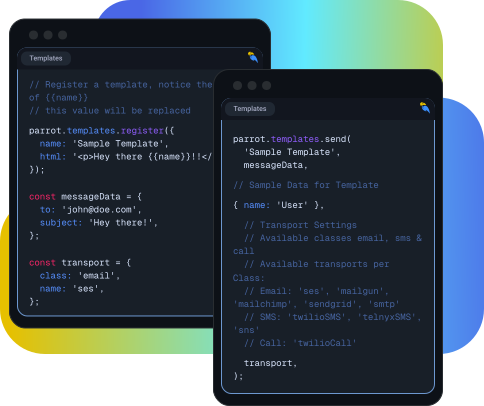
Define reusable HTML or text templates with dynamic parameters for consistent, version-controlled communication.
Connect Mailgun, AWS SES, Postmark, Resend, Twilio, SMTP servers, voice gateways, or custom transports while Parrot handles orchestration.
Parrot Messenger plugs directly into the providers you already trust no rewrites required.
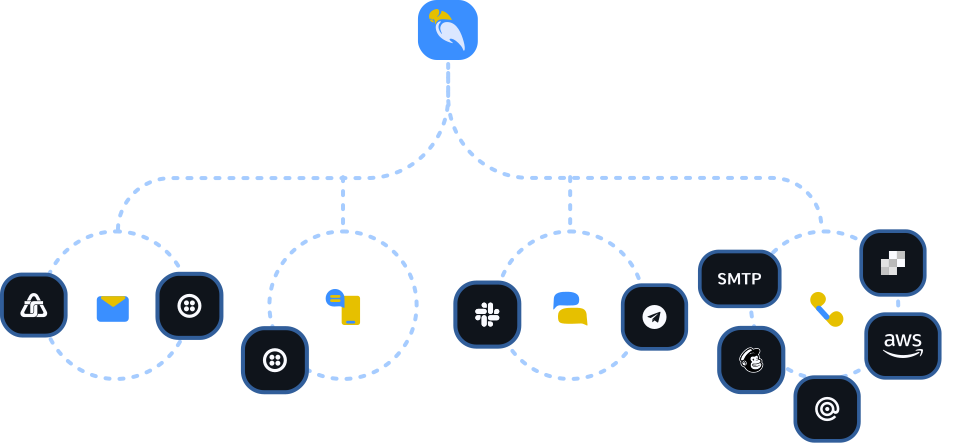
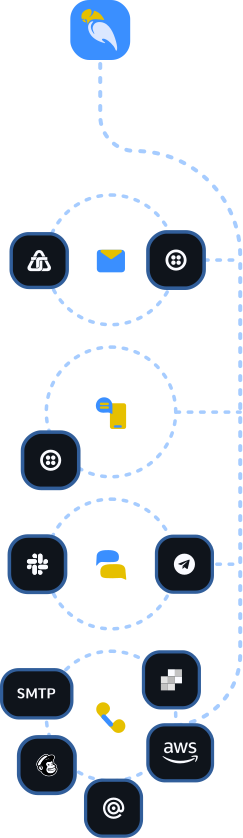


Projects usingParrot Messenger





Define a message once. Parrot Messenger delivers it across the services you
choose without duplicating logic or leaking provider details.


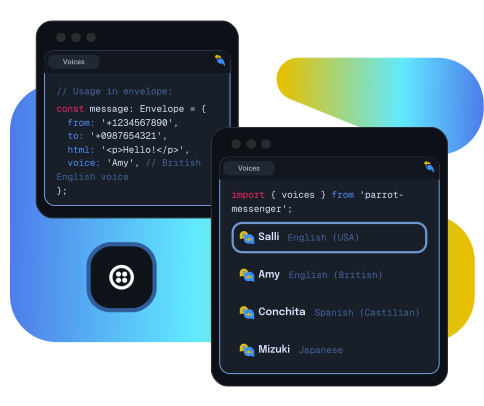
Control voice selection and transport routing directly in code.
Parrot Messenger keeps delivery predictable, testable, and provider-agnostic.
Register templates and render them dynamically at send time using Handlebars without embedding delivery logic into your application code.
Highlights
Async Templates: Fetch template content from APIs or CMS systems at send time, with explicit response mapping and zero redeploys.
Parrot integrates with Twilio Voice by passing voice settings directly in the call request, while Twilio handles text-to-speech rendering. Voice, language, and locale are selected through typed configuration without hardcoding provider-specific logic.
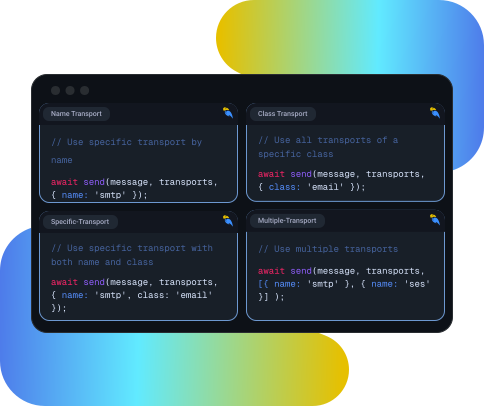
Control which transports are used by provider, by channel, or both at send time.
Use cases:
Parrot Messenger is used daily inside Blackstone to ship production systems with fewer dependencies and less messaging overhead.
"We built Parrot for the developer community to replace three different messaging SDKs in a single sprint. The API stays out of the way and does exactly what it should."
"Our goal was to standardize email, SMS, and chat notifications without coupling them to business logic. Parrot made that possible and eliminated weeks of maintenance work."
"I've been building backend systems for years, and it's rare to see an abstraction that reduces complexity without hiding critical details. Parrot strikes that balance well."

Partner with Blackstone to design, build, and scale backend systems and automation that grow with your product.
What We Bring to the Product
v2.3.2 is the current stable npm release. It packages the latest security and dependency work without asking teams to rewrite their messaging integration.
The current npm release ships the safe dependency batch, production audit fixes, and release pipeline improvements without changing the public API.
Apr 2026
Parrot Messenger now cuts tags, changelog updates, GitHub releases, and npm publishes through semantic-release on master.
Apr 2026
The latest package resolves the actionable production dependency alerts while keeping the transport layer behavior stable.
Apr 2026
Resolved all CodeQL findings: atomic regex escaping, single-pass HTML conversion, and stricter URI validation.
Mar 2026
Pinned all GitHub Actions to commit SHAs, scoped token permissions, and added CodeQL static analysis.
Mar 2026
Test your messaging logic without sending real messages. Import from parrot-messenger/testing.
Mar 2026
Two new email providers added for broader delivery flexibility.
Mar 2026
Upgraded Telnyx SDK with automatic MMS detection via media URLs.
Mar 2026
Slack and Telegram now supported through a unified Chat Transport.
Jan 2025
Added Telnyx and AWS SNS for multi-provider SMS routing.
Jan 2025
Credential isolation, input validation, and HTML sanitization added.
Jan 2025
New error types with clearer, context-rich debugging messages.
Jan 2025
Less any, more strict TypeScript across all transports.
Jan 2025
Smarter client management and leaner runtime execution.
Jan 2025
Expanded tests ensure stability across core and provider layers.
Jan 2025
Migrated to GitHub Actions with enforced format + coverage checks.
Jan 2025
Install Parrot Messenger in minutes and send your first message across email, SMS, calls, or chat using a single, predictable API. No provider lock-in. No duplicated logic.